

A Day When A World Cup Hero Was Crowned
The final whistle blew at Mercedes-Benz Stadium in Atlanta, and for a moment no one really seemed to know what they had just seen.
Spain’s players stood frozen. On their faces were disbelief, annoyance, and exhaustion. On the pitch, Cape Verde’s players hugged like they had just won the World Cup themselves. Some dropped to their knees. Others sprinted toward their supporters. The final score floating above their heads was not a prospect many expected before kick-off.
Spain 0. Cape Verde 0.
But in reality, it was just a tie on the scoreboard. That was one of the best moments in Cape Verdean football history.
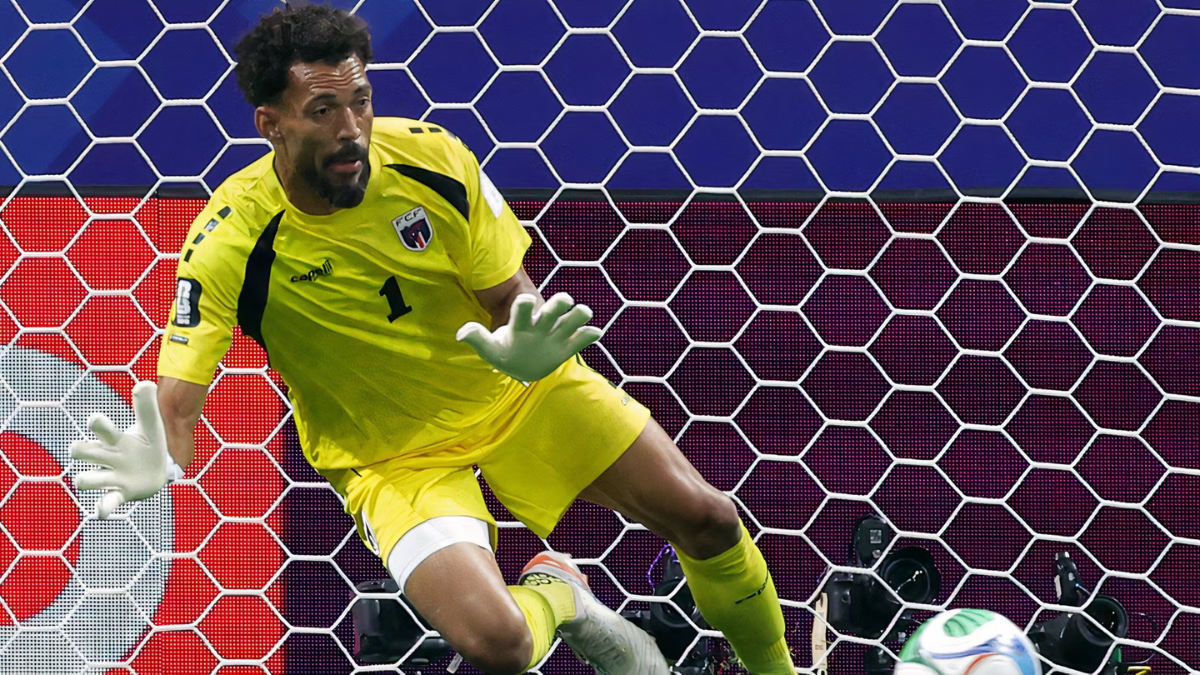
And in the middle of it all, a goalie — gloves, captain’s armband and smile that lifted an entire country. And so at 40, with virtually all footballers retired long before they hit that age and instead sitting in television studios covering major tournaments, Vozinha turned in the performance of his life.
Spain poured everything at him for 90 unremitting minutes. You rain crosses into the penalty area. Long-range strikes tested his reflexes. Headers which appeared to be knocked in the top corner. But all of those assaults ended the same way: with Vozinha standing tall.
Seven saves later, the goalkeeper was left with his Player Of The Match award in hand and what must be millions of eyes watching on him across the globe.
When the night before was out, the question that every football fan was asking.
Who is Vozinha?
The explanation would signal one of the most incredible stories heading into FIFA World Cup 2026.
Who Is Vozinha? Story: The Man Behind Cape Verde’s Greatest Footballing Achievement
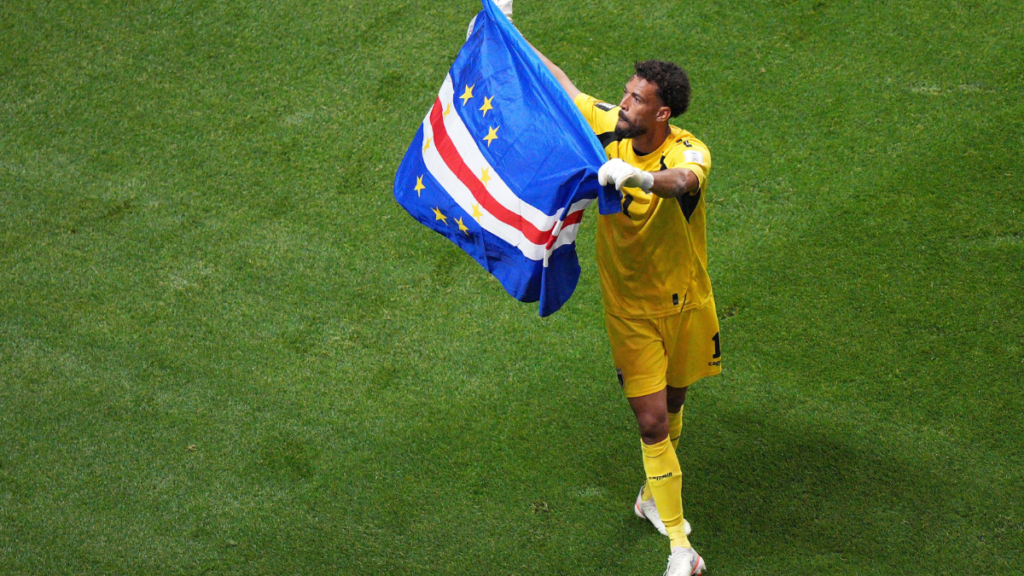
His real name is Josimar José Évora Dias but to the world, he his known as Vozinha.
He was born in Mindelo, on the island of São Vicente in Cape Verde, on June 3rd, 1986, far away from where football’s levers are moved. Vozinha was nurtured on something very different to how most modern stars are being born in the privileged confines of elite academies in Spain, England, Germany or Brazil — an island nation with absolutely no resources but bucket loads of love for the game.
At around 1.89m, he is well built for a top quality keeper. But his biggest attributes have never been just height or athleticism. He has been praised by coaches and teammates for his leadership, poise under fire and ability to marshal a defense since being drafted.
More than a decade later, when he finally stood on the pitch at FIFA World Cup 2026, it was with Cape Verde — the nation that had him to thank for having competed on all -in all international level. He was now among the most capped players in his country’s history, and one of the biggest football legends Africa had ever produced – a person also immense between the lines.
Even so, outside of the tight-knit world of football he still remained relatively unknown.
And that anonymity would vanish in the blink of a night.
The reason Vozinha’s story is so captivating, however, is that at an age where football normally looks to younger stars for inspiration and identification through the world’s media. Teenagers and players in their early twenties rule World football 2026 Millions are spent on the search for the next wonderkid. Youth and potential are celebrated on social media.
Vozinha represented something entirely different.
He represented endurance.
He represented patience.
This was a reminder that dreams do not arrive to us on a guaranteed timetable.
Growing Up in Mindelo: Where the Dream Began
Vozinha was more than just a national hero to Cape Verde long before he ever reached that level, he was the boy days when he chased the ball through the streets of Mindelo.
It is often referred to as Cape Verde’s cultural capital. Music flows through its neighborhoods. Families gather in public squares. Football is the heart and soul of community life.
As a young Josimar, football soon became larger than life itself. It became an obsession.
He made time to play whenever and wherever he would like many children across the continent of Africa. There was formal training, but just as importantly there were many scrimmages with friends. These games were lessons in creativity, resilience, and sportsmanship.
Imagine the scenario in Cape Verde — all those hopefuls were so far away from anywhere. Scouts rarely visited. International exposure was limited. Looming, of course, was the simple fact that a filter system in short supply led to opportunities for young players in Europe that they more frequently took for granted.
But those difficulties conditioned Vozinha’s mindset.
Nothing came easily.
No one gets anything without earning it.
Every advancement required sacrifice.
This young eventual target keeper learned those lessons early, and they stayed for a lifetime.
Friends from his youth remember a driven kid who always appeared unwilling to take average outings. He was a natural-born leader from an early age, the type who would lead you to your next career choice. He took responsibility. He encouraged teammates. The way he carried himself around football belied his youthfulness.
No one could have known he would go on to frustrate Spain on the biggest stage in world football.
However, they were already laying the groundwork for that success.
From Local Pitches to Professional Football
Vozinha, who learnt his trade at one of Cape Verde’s biggest clubs, Batuque FC. From there, he began to turn natural talent into professional skill.
One of the most isolated positions in football is often described as goalkeeping. It takes focus, bravery, and responsibility. Mistakes are immediately visible. The thing about success is that it’s an uncountable noun mixed in a powdery substance: you don’t see it coming until, frankly, the right save changes everything.
Vozinha embraced those demands.
While playing for Batuque FC, his performances were noted and eventually took him to CS Mindelense, one of the main clubs in Cape Verdean football. These years were crucial for him. They chased him for the position he was brought in to occupy, offering meaty competition and experience along the way, as well as giving Kenton a stage from which he could earn recognition nationally, perhaps even push for the No.1 jersey after the departure of Casey Keller.
However, ambition pushed him further.
Cape Verde’s own domestic league allowed for limited exposure. As with a multitude of gifted African footballers, he knew that to take their game to the next level international opportunities would mostly be out-with his homeland.
It was not an easy decision to leave home.
That was to adjust to new cultures, foreign languages, and a new football environment. It was about letting go of certainty in the name of progress.
But those risks would ultimately characterize his career.
Chasing Opportunity Across Continents
One of the big lessons from Vozinha’s career and one that we need to be reminding ourselves of then if not now is that no success path tends to be linear.
Unlike players who have devoted their careers to one of the elite clubs, his career was more like a map stretched across continents.
Competition is fierce and he spent time in Angola. He then had spells at Moldova with Zimbru Chișinău before moving on to Cyprus with AEL Limassol and then further afield with AS Trenčín in Slovakia. It also became an almost vital chapter of his career via spells with Gil Vicente and Chaves in Portugal.
Every move demanded adaptation.
A different country meant a different football culture. Various competencies were necessitated by diverse football cultures. Some leagues emphasized physicality. Others focused on tactics or quality of technical code.
So many players have difficulty being forced to start over time and again.
Vozinha thrived.
Every challenge was an additional layer in the making of him. Each league presented a new lesson in goalkeeping and leadership.
Come his late thirties he had a wealth of experience that few keepers in the world would have bettered.
This is ironic because the convoluted route that often looked like an impediment to his advancement became perhaps his singular strength instead.
He had already been battling uncertainty for years when the pressure of the WC came knocking.
Spain’s attackers were intimidating.
But they were not as intimidating to him as the challenges he had faced over his career.
VOZINHA: The Meaning Behind the Name
Every football legend has a story. Some are known for unforgettable goals, some for iconic moments. Take the instance of Cape Verde sensation: his every bullet point recalls an anecdote rooted deep in childhood and family — right down to his name.
And although the footballing world knows him as Vozinha nowadays, that name didn’t come from within a professional dressing room or an advertising campaign. Its roots lie decades back in the working-class districts of Mindelo.
The universally recognizable word “grandma” in Pokemon is paired with the Portuguese nickname “Vozinha,” which translates to grandmother or granny. The description has stuck since the goalkeeper’s youth — according to the man himself. He always used to run to his grandparents anytime he was in trouble or feeling resilient and needed comfort. That’s when older children began to tease him about this habit and the nickname eventually stuck.
It began as childish teasing but has become a piece of his identity.
In due time, another player came along with the same first name… Josimar. The nickname became his footballing identity to avoid confusion. Who could have thought that decades later the name would feature on scoreboards at the FIFA World Cup and millions around the world searching for it?
After the draw with Spain, interest in this nickname skyrocketed. The fans in Europe, Africa, South America and Asia started digging into the reason behind it. And the story behind the name in many ways represented all that made Vozinha so attractive. It was real, it was personal and it was unique, because family not fame.
The world discovered a goalkeeper. Meanwhile, it found a man who had never lost his roots.
Becoming Cape Verde’s Guardian
Vozinha has been in the hearts of Cape Verdeans long before his heroics at the World Cup.
For many smaller nations the international football landscape can be a cruel one. Resources are limited. Opportunities are scarce. Expectations are often low. But Cape Verde has spent the last 10 years showing that willpower and good organisation can compensate for many shortcomings.
Vozinha was at the centre of that improvement.
He has gone on to play for Cape Verde, his senior international debut coming in 2012 and he is still committed to the national team since then. Across qualification campaigns, Africa Cup of Nations tournaments and friendlies, he established himself as one of the more reliable figures in the national-team landscape.
His importance extended beyond shot-stopping.
His teammates often mentioned how he led by example. Coaches trusted his experience. The younger players regarded him as a mentor. When Cape Verde set off on its improbable journey to qualify for the World Cup they would do it with Vozinha having developed into one of the team’s emotional leaders.
Class and seniority aside, the captain’s armband meant more than class.
It represented trust.
It represented respect.
It symbolized years of sacrifice for his country.
Individual: Cape Verde have already achieved what is itself a minor miracle by qualifying for FIFA World Cup 2026. The island nation developed into one of the tournament’s most exciting dark horses. But mere qualification was never enough for Vozinha.
He wanted to compete and that is precisely what he did against Spain.
Miracle at 40: Vozinha Stunned Spain
Spain arrived with high, lofty expectations for the FIFA World Cup 2026.
They were European champions, and one of the favourites for the tournament, with world class players all over the park. Their side boasted players who had played in Champions League finals, title races and international tournaments in pressure cooker arenas.
On the other hand, Cape Verde was making its World Cup debut.
The chasm between the two teams seemed massive.
But football has always been a game made for miracles.
Spain were on the ball from the first whistle. Their passing was precise. Their movement was fluid. Attacks came at them from all directions.
What they never expected was to be up against a keeper having the game of his life.
There seemed to be a spot of fortune waiting for Spain time and again. Time and again, Vozinha intervened.
Forced away a fierce strike from distance. He confidently claimed a threatening cross. Lightning-quick reflexes denied a close-range opportunity. Each save raised the ire of the Spain players, and at the same time fed Wikipedia to Cape Verde.
An intriguing mental shift happened gradually through the course of the match.
As time went on, the pressure mounted for Spain to break the deadlock.
But the longer Cape Verde survived, the more they believed.
And, brilliantly, a 40-year-old goalkeeper had written his way into that transformation in the most definitive sense.
His official number of seven saves doesnøt tell the full story. In addition — perhaps more than that even – his positioning, communication and coolness. He read his own defense like a master, recognizing potential danger before it really formed, and kept the kind of ice-cool composure only time spent in top-level football can impart.
By the time the final whistle did arrive, however, Spain had excelled in most statistics.
What Cape Verde had was infinitely more valuable.
A point.
And a spot in World Cup history.
The performance was soon in comparison with some of the best goalkeeping displays that have ever been witnessed at international tournaments. Whether it ranks among the best ever will be left to debate, but that is unlikely.
It was historic for Cape Verde and for Vozinha, it was transformational.
The Emotional Story That Moved Millions
Some of Vozinha’s most impactful moments during the World Cup came after the battle ultimately closed though.
When the Player of the Match was swamped by journalists, and a camera panned in on him, many thought it would be an examination of tactics, saves.
Rather, they saw a more human sight.
Receiving emotional support for your family as a veteran goalkeeper
He remembered the late grandparents whose influence would inform his entire life, and from whom he carried on both a legacy and the nickname. He described the number of sacrifices he made over the course of his journey. He made it most painfully clear that his mother was not there because she hadn’t been able to get a visa.
The news was a shock worldwide.
The sentiments behind his words resonated with millions of fans across the world. This was not a footballer talking about football. A son talking on behalf of his only wish: That his mother should be there with him at his highest point in life.
It quickly gained traction in the global media.
People back home also sympathized or even gushed. Various messages of encouragement came on through social media. For the many viewers who found that interview affecting more than the match.
Vozinha reminded everyone at a time when athletes are too often boiled down to numbers and accomplishments that sport is still very much individual.
There is Human Story behind every performance
He happened to touch millions.
Social Media Explosion: From 50,000 followers to more than 14 million
Very few FIFA World Cup 2026 stories have been shared as quickly on social media as Vozinha’s emergence.
He had a low profile before his meeting with Spain. His Instagram had around 50,000 followers ─ a pretty respectable figure, but far from worldwide stardom.
What followed was 90 minutes of history being rewritten.
Football fans scrambled to do some research about the goalkeeper who was causing all sorts of trouble for Spain, as his saves began appearing on television broadcasts and across social media feeds. Prominent content creators and large football platforms prompted their audiences to follow him.
The reaction was then and larger than anything imaginable.
His followers soared into the millions throughout the course of the match itself. Reports then suggested that he had attracted millions more followers by the next day. His audience surpassed 10 million within a few days. Its following was later reported to exceed 14 million.
The growth was unprecedented.
No footballer in history has ever seen their social-media grow at such a pace off the back of just one game. Even more surprisingly, the phenomenon was not just limited to football fans. The tale of an underdog at the age of 40 earning international headlines hooked even those who seldom followed the sport.
That showcase exemplifies just how immense World Cup power can be.
A lifetime can change from just one incredible performance.
An unfamiliar face in the global sporting theatrics may only find his or her walk on stage side still point of those erstwhile household names after they do something never to be forgotten, one evening.
On social media that day, for Vozinha it was evidence that retelling his tale had now gone beyond football.
He was more than just Cape Verde’s keeper anymore.
He had become an international phenomenon.
The Day the World Fell in Love with Vozinha
Football fans admire greatness.
However, they love realness even more.
As he became an international sensation, the world fell in love with Vozinha because here was a story that transcended sport. He wasn’t the richest player in football. He was not its youngest. He was not its most famous.
Instead, he represented perseverance.
At an age when most athletes are retired, he got the make-or-break stage of his life. He emerged as one of the more fascinating stories in a tournament filled with billions of dollars worth of superstars.
Fans saw some of themselves in his journey.
Someone who had labored away in relative obscurity for years. They saw a person who believed in a dream, long after most would have given up. They saw a person who found success not due to circumstances, but because even when they set out the determination never disappeared.
That combination proved irresistible.
Cape Verde became a second team for neutral supporters Social media celebrated every save. His story was splashed across television networks. Journalists across continents sought interviews.
One of football’s smallest nations, for a while, became one of its biggest stories
The reason? The guy standing in between the posts.
Vozinha’s Private Life Outside of Football
He is still relatively shy and reserved for a man who has hit the mainstream from nowhere.
He has avoided the massive kind of publicity that a lot of modern athletes seem to find themselves getting embroiled in. Very little of his family life has emerged in the public domain, suggesting a deliberate decision to keep such matters out of the limelight.
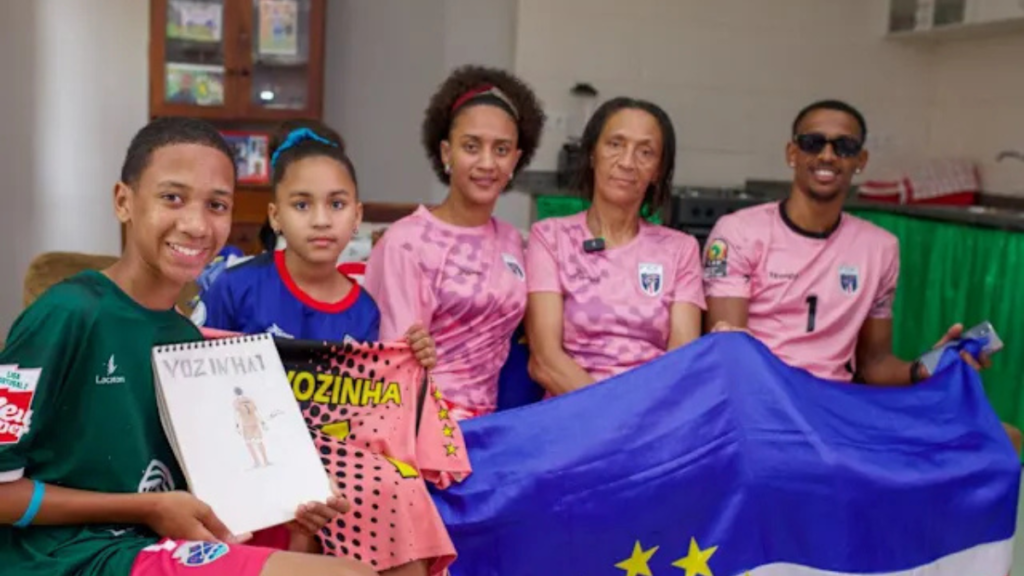
The one thing that is clear, though, is family.
His grandparents were instrumental in raising him, which led to the nickname that ultimately made him a household name. His mother still plays a significant role in his life. In various interviews, he has consistently highlighted the wisdom and assistance he got from family members during the journey.
Those who have spent time with him are accustomed to hearing a soft-spoken, down-to-earth man who will tell you his personality has not changed even with increased notoriety.
Maybe that’s why millions identified with him as quickly as they did.
Success had arrived.
Humility remained.
New Opportunities, a Surprise Second Prime and Vozinha Net Worth
For the majority of his career Vozinha plied his trade away from football’s financial elite.
Because while his professional path through Angola, Moldova, Cyprus, Slovakia and Portugal brought security and admiration over the years, it did not come with the net worth that often arrives from Europe’s richest leagues. His net worth is somewhere in the range of $500,000 to $1.5 million according to estimates, but actual figures have never been publicly confirmed.
But World Cup 2026 could shape his financial future in an entirely different way.
Few stories in the tourney have been as compelling as his, and brands are naturally drawn to compelling stories. Digital partnerships – meaning sponsored posts, endorsement agreements, ambassador roles etc. could give new streams of income.
At 40 years old, Vozinha may, astonishingly, be just about to hit the most financially lucrative period of his career.
Even the potential of that is what makes his rise so extraordinary.
More often than not, players reach the height of their fame in their 20s.
It was discovered in his 40s by Vozinha.
Vozinha’s Story Is More Than Just A Footballer
In the history of Vozinha, however, way beyond football stats, social-media numbers and tournament results.
His story challenges assumptions.
It challenges assumptions about age.
It challenges assumptions about opportunity.
It demands that we rethink the world as it is for athletes of smaller nations.
In a sporting world all too consumed by youth, Vozinha illustrated the sometimes irreplaceable quality of experience. At a time when football appeared to be divided into a handful of superpowers and rich clubs, he showed the world that faith and will can still produce magic.
He became a beacon of hope for young players from Cape Verde.
He is a reminder to football supporters all over why the World Cup enchants generation after generation.
Conclusion: The Keeper With The Heart Of The World
Way beyond the history books of FIFA World Cup 2026, football fans will remember the nights Cape Verde held Spain to a draw.
They will remember the saves.
They will remember the emotion.
They will remember the incredible journey going from around 50,000 Instagram followers to over 14 million.
Most importantly, they will remember the man behind the pages.
For decades, Josimar José Évora Dias chased a dream that swam just beyond his reach. He went around the world, donned his country’s colors with pride, suffered blows and waited for his chance.
And when that chance eventually came, he took it.
Rising to the occasion in a manner that would’ve been hard for even Stephen King to imagine, Vozinha took his second chance and made it count; at 40 years old no less, on football’s biggest stage.
A goalless draw between Spain and Cape Verde will appear on the official records.
That history will remember a great deal more than that.
The tournament that brought Vozinha to light will go down in history.