

Introduction
The FIFA World Cup 2026 is poised to be one of the most grand and historic tournaments ever held in international football. Translating a whole new era for the sport by expanding from 32 to a record 48 teams and bumping matches from 64 to an astonishing 104, the tournament is slated over September across United States, Canada and Mexico. Thus far, FIFA has never had World Cup shares spread along three nations, and it additionally hasn’t had a competition so far-reaching with regards to geography.
This is due to the fact that while football’s mid-summer showpiece has evolved since its first edition in 1930, FIFA World Cup 2026 is shaping up to be the most profound shift for decades. An event which is expected to bring in the eyes of potentially billions across the globe, creating record levels of economic activity in Qatar and reiterated football’s growing global appeal. For a full month, fans from every continent will see sport, culture and international unity put on display before their eyes when the best national teams in the world compete for football’s top honour.
However, the FIFA World Cup 2026 will not only be a sporting competition but also a cultural event that brings together millions of fans with one thing in common: all are crazy about football. From Mexico City′ s iconic Estadio Azteca to the modern-day stadiums of the United States and Canada, the tournament is sure to serve up moments that will transcend sport and become part of football fable.
FIFA World Cup 2026 Overview
The tournament is officially known as the FIFA World Cup 26™ and will be the 23rd edition of the FIFA World Cup. This tournament, the first World Cup ever to be hosted by three co-hosting nations — US, Canada and Mexico, is organized by FIFA the world governing body for football.
32 national teams from around the world will compete in 104 matches over a period of 39 days as part of 2026 FIFA World Cup This broadened structure aligns with FIFA’s commitment to making the tournament more accessible, allowing growing footballing nations greater opportunities to feature on the world stage.
Avidlance, its data partner and management platform, expects the competition to attract more than five billion viewers worldwide — via television broadcasts, streaming services, social platforms and other digital touch points. As football continues to go from strength to strength in North America, it is expected that the tournament will set a number of attendance and viewing figures records.
The other historic thing about the FIFA World Cup 2026 is the scale of participation. The expanded format of 48 teams will allow far more nations to compete, introducing greater geographic diversity and increasing its attractiveness as a global event.
FIFA World Cup 2026 Dates
The date of the FIFA World Cup 2026 is one of the most searched words by football fans. The tournament will begin on June 11, 2026, and officially run through July 19, 2026. FIFA made the announcement on Tuesday.
Mexico City will host the opening match at the iconic Estadio Azteca, which will become the first stadium to prepare for matches across three different FIFA World Cups. The final will take place at MetLife Stadium in the New York/New Jersey area on July 19, 2026.
This expanded format for FIFA World Cup 2026 requires a more extended competition window than previous iterations of the tournament. There will be 104 matches, and FIFA has created a calendar that allows teams to recoup well between matches while offering football involvement for fans almost everyday.
The schedule, largely occupied by the group stage, follows the Round of 32, followed by the Round of 16, quarters, semis and final third place playoffs. One of the biggest changes that have come from the tournament’s expansion is the addition of the Round of 32.
Ahead of the tournament, fans will watch for developments surrounding when match days and knockout-stage fixtures are set up for the FIFA World Cup 2026.
FIFA World Cup 2026 Host Countries
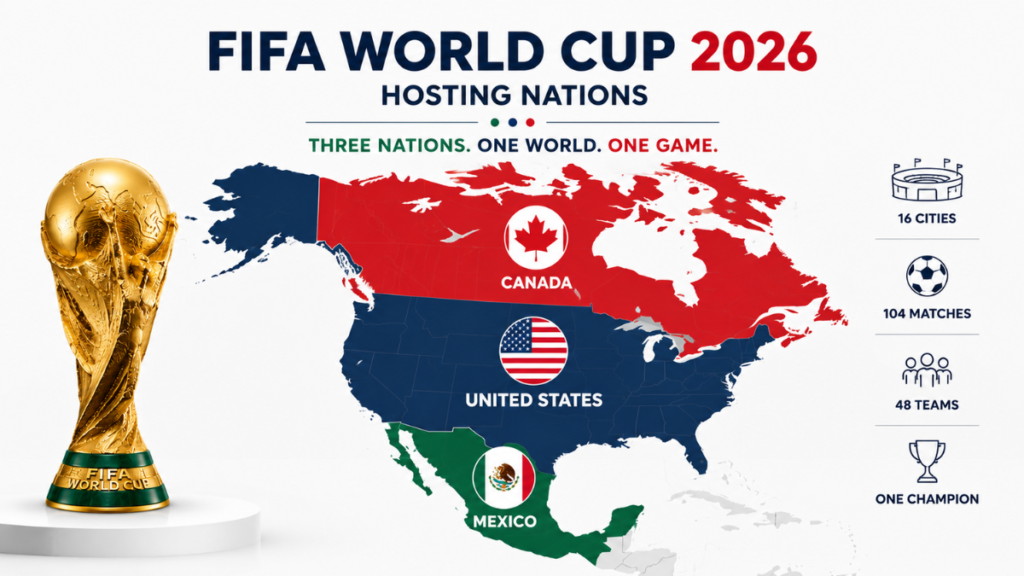
The United States, Canada and Mexico will host the 2026 FIFA World Cup. They won the right to host football’s biggest tournament in history after beating Morocco in the 2018 FIFA Congress vote for their joint bid.
Most of the matches will be played in the United States, which is also the chief host nation. Reasons for the bid’s success included the country’s extensive sports infrastructure, modern stadiums, transportation networks and commercial capabilities. The leap back to twenty years ago when the USA earnt the right to host the 1994 FIFA World Cup, a record that still stands to this day for most attendance over a tournament in World Cup history.
Mexico will become the first nation in history to host games in three different FIFA World Cups. Mexico has a fervent football culture and was able to develop a hotbed of support after previously hosting in 1970 and 1986. Blots like Pelé and Diego Maradona have already been written in the record books of La Liga on Mexican soil.
All Canada FIFA World Cup matches will be held in 2026. With the FIFA Women’s World Cup in 2015 and rising football infrastructure, Canada has hosted football events, but FIFA World Cup 2026 is the largest of any kind to ever take place in the country. With strong investments already made to youth development and facilities, especially as football grows in popularity all throughout Canada, it is particularly significant that its inclusion in the 2026 World Cup was part of the announcement.
The trio complement with a combination of contemporary infrastructure, rich cultural diversity, global economic stability and sporting passion for football. Together these were critical factors in FIFA’s thinking.
Cities and Venues for FIFA World Cup 2026
Perhaps the most thrilling part of FIFA World Cup 2026 is its incredible host city and stadium lineup. The tournament will span 16 cities in the three host nations.
World Cup 2026 matches will be hosted in Canada and two cities in the province of British Columbia – Toronto and Vancouver. Toronto Stadium and BC Place in Vancouver are chosen to represent Canada.
Host cities in Mexico include: México City, Guadalajara and Monterrey Mexico’s Estadio Azteca, still one of football’s finest stages, will host the opening game. Latin America has seen it, even recently as two of the newest stadiums are in Guadalajara’s Estadio Akron and Monterrey’s Estadio BBVA.
United States (Atlanta, Boston, Dallas, Houston, Kansas City, Los Angeles, Miami, New York/New Jersey, Philadelphia, San Francisco Bay Area and Seattle)
The first of these sites is AT&T Stadium in Dallas, home to one of the largest crowds and next-gen technology. Moreover, Mercedes-Benz Stadium in Atlanta, SoFi Stadium in Los Angeles, Hard Rock Stadium in Miami, and Lumen Field in Seattle are tipped to be significant venues too throughout the tournament.
The 2026 FIFA World Cup final will take place at MetLife Stadium in New York/New Jersey. Boasting a capacity of more than 82,000 and next to one of the world’s most powerful metropolitan areas, it makes for a perfect venue for the sport’s greatest showpiece.
Dallas is the host of the semi-finals and Atlanta will stage some of America’s most state-of-the-art venues throughout the knockout stages.
A number of these stadiums consistently hold NFL games, international sporting events from soccer to the Olympics, live concert tours and major entertainment spectacles. World-class facilities, transport links, and hospitality services are likely to provide an excellent experience for players, officials, media personnel and supporters.
The host cities themselves are astonishingly diverse in terms of cultures, languages, cuisines and traditions. This is a cross-city journey that takes supporters from the historic streets of Mexico City to the cosmopolitan bustle of New York, the entertainment capital of Los Angeles and through multicultural communities in Toronto and Vancouver.
Opening ceremony of the 2026 FIFA World Cup
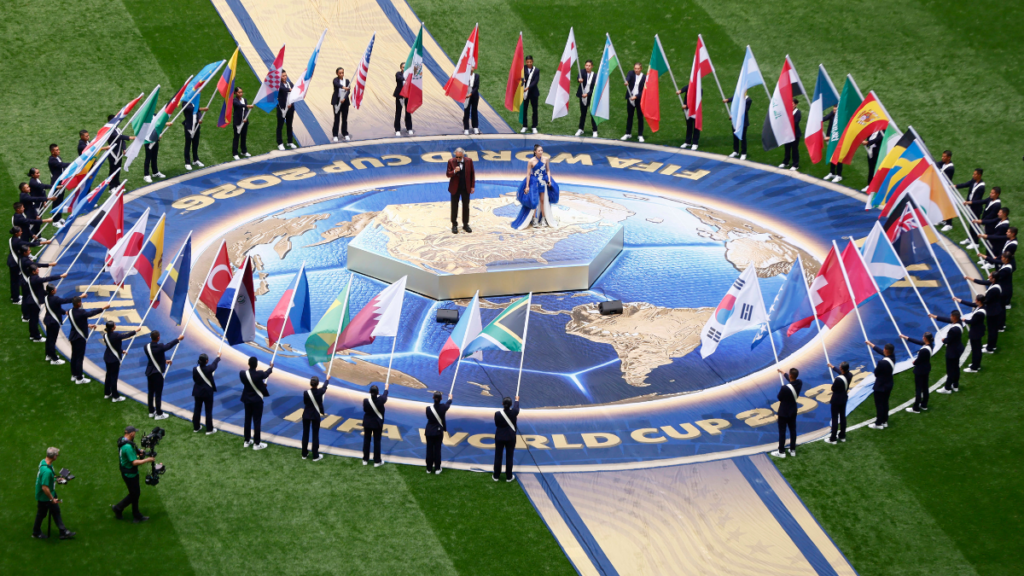


The opening ceremony of FIFA World Cup 2026 promises to be one the grandest sports celebrations ever held. The ceremony will precede the opening match on June 11, 2026 in Mexico City at Estadio Azteca.
Mexico City is symbolic; football turns its back on the future and hearth in order to acknowledge the rich heritage of the past, who played properly? Trained unto October 2023 And Estadio Azteca is one of those legendary stadiums in world football that have seen the greatest moments of the game.
While FIFA had yet to announce the entire list of performers, according to FIFA’s latest official updates, the opening ceremony will feature the cultures of all three host nations. Music, dance, visual storytelling, digital technology and live artistic performances will come together to form a worldwide exhibit seen in turn by hundreds of millions of viewers.
It is expected that the ceremony will focus on themes of unity and diversity, inclusion as well as on how football can unite people. Also, the creative vision for the event will likely be centered around Mexico’s rich cultural heritage and Canada’s multicultural identity as well as the influence from America.
More than 80,000 spectators are expected to be present in the stadium itself and millions more will follow via live broadcasts across the globe.
Also check: Highest Score in IPL History – Top 10 Highest Individual Scores Ever Recorded
FIFA World Cup 2026 Mascots
One of the major topics being talked about is the FIFA World Cup 2026 mascot program. Based on promotional info from FIFA, three mascots representing the host nations were introduced — Clutch for the U.S. and Maple for Canada and Zayu for Mexico.
These mascots are embodiments of the different cultural identities found in each respective host country and symbolize friendship, diversity and youth engagement.
Clutch is the heart of the hustle, drive, and creativity you might find more traditionally in America. Maples are inspired by Canada’s most well-known icon, a regimented entity that represents acceptance and cooperation, strength or recovery, and becoming one. This season Zayu is a celebration of Mexico’s rich heritage and deep football traditions.
The mascots are designed to resonate with the youth, promote education, inspire footballing participation and act as ambassadors for the tournament.
While they will be present at matches, fan festivals, community events and digital campaigns, the mascots also are expected to appear in merchandising, promotional materials and social media engagement activities.
The insightful FIFA World Cup 2026 mascot process serves as a great example of both FIFA’s broader efforts to ease accessibility and interest in the event for fans young and old, but also its commitment to proudly underline the cultures of each vicinage it hosts with flair.
FIFA World Cup 2026 — Official Brand, Theme and Identity
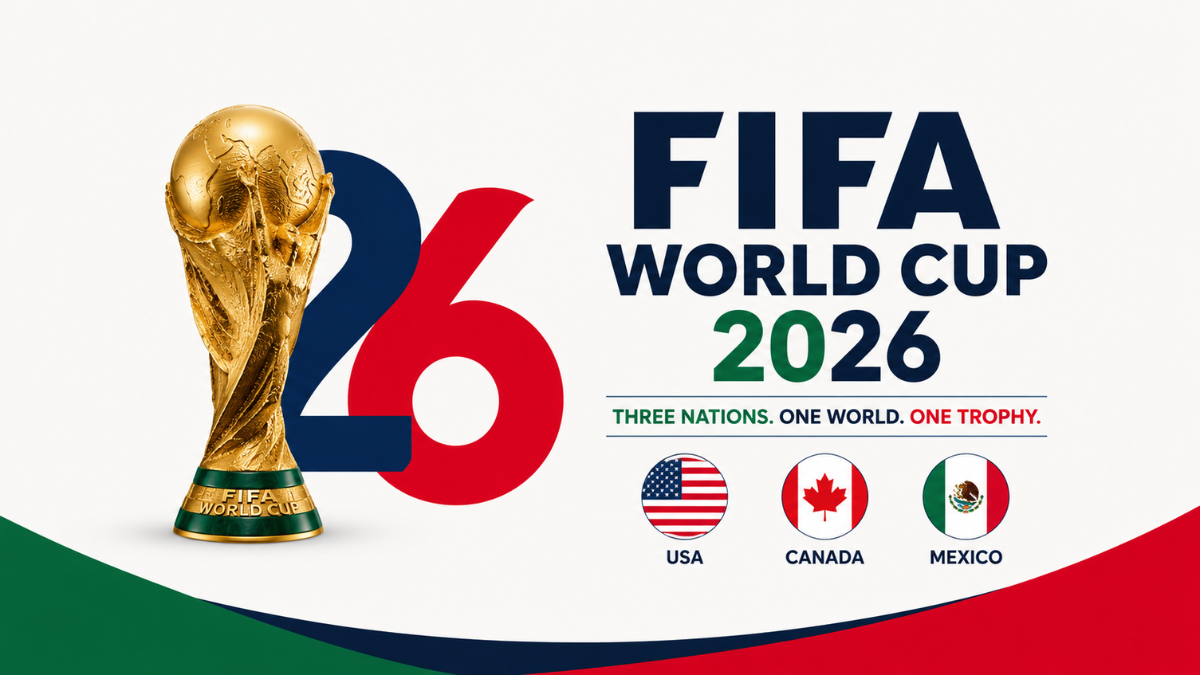
The FIFA World Cup 2026 is set to be the biggest edition yet but its visual identity will not only be bigger, it will also be different. In May 2023, FIFA officially presented the tournament logo at a glitzy gala attended by football greats, celebrities and ambassadors from the host countries. The branding also prominently features the FIFA World Cup Trophy and the number “26” as two simple, yet high impact statements that allow all host cities and participating nations to take ownership of their own look within a single global visual identity.
FIFA World Cup 2026 logo The FIFA World Cup 2026 logo is perhaps more unique than previous iterations of logos for previous tournaments as those were primarily stylized illustrationsHowever the FIFA World Cup 26 logo makes the actual (actual) loaf of trophy front and centre. FIFA said it developed the idea to highlight the special characteristics of each tournament, while also focusing on the trophy as the highest individual prize in football. Additionally, this brand captures the diversity in North American culture as multiple cultures, languages, traditions and communities co-inhabit one landscape.
This identity is partly formulated through the host city branding program. Every host city has developed its own custom visual theme, inspired by local landmarks, culture and football traditions. Such an approach will allow New York, Mexico City, Los Angeles, Toronto and Miami or Vancouver to continue expressing their personalities while remaining connected with the overarching FIFA World Cup 2026 theme.
The tournament appeal suggests: “Uniting people, celebrating communities through football, cultural exchange and being all inclusive globally.” Those values are consistent with FIFA’s hopes of creating the most accessible and worldwide representative World Cup in history.
FIFA WORLD CUP 2026 Official Match Ball
The official match ball is always one of the most exciting aspects of any World Cup, and things are no different this year. Looking ahead to the demands of modern football, Adidas products for FIFA World Cup 2026 is based on a history (and long-term partnership) with FIFA and has launched the iconic Adidas TRIONDA especially for FIFA World Cup 2026.
The Adidas TRIONDA is equipped with advanced technology designed to enhance precision, consistency and performance. Similar to many of the World Cup balls in recent history, it also features small sensors that have the ability to support match officials through semi-automated offside technology and real-time ball tracking systems.
The ball features a design inspired by the three host nations. Representing the floral nature, colors and graphic patterns symbolize the cultural heritage, landscapes and sporting traditions of the USA, Canada and Mexico. The ball represents the bond between all three nations and unfolds how history is being written this summer with the unprecedented tri-national structure of the tournament.
Technological specifications involving advanced aerodynamics and surface texture for grip, in addition to stabilizers for better flight stability. These innovations will allow players maximum precision as they navigate the tournament while still ensuring fairness and consistency.
Format of FIFA World Cup 2026
The FIFA World Cup 2026 format is one of the major changes in the history of the FIFA world cup. The tournament is set to grow from 32 teams up to 48, radically altering the structure of the tournament.
In this format, 48 competing nations will be divided into 12 groups of four teams apiece. All teams participate in three group-stage matches. The top teams from each group along with the eight best third-placed teams will advance to the knockout stage.
The first of its kind in World Cup history, this format creates a Round of 32. From this point, the tournament goes through the standard knockout rounds – Round of 16, quarter-finals, semi-finals, third place playoff and final.
The new FIFA World Cup 2026 groups system increases the number of matches from 64 to 104 and gives more spots in your traditional football powers Asia, Africa, North America, Oceania and other up-and-coming soccer stars. FIFA is convinced the growth will bolster global football development while maintaining competitive quality.
The expanded format gives rising nations more chances to compete on the world stage than earlier World Cups comprising 32 teams and eight groups. This also means fans will see more matches & greater global representation across the event.
Qualifiers of FIFA World Cup 2026
The FIFA World Cup 2026 qualifiers is the single largest qualification campaign in football history. With a larger 48-team setup, every single confederation has been granted more spots.
The tournament gets an automatic place for all three of the host nations, and thus each of the United States, Canada and Mexico qualifies. The remaining places are distributed among FIFA’s six continental confederations.
As far as direct qualification slots go, Europe (UEFA) gets the biggest share of nation births. The Confederation of African Football (CAF) continues its expansion as even more African nations will be able to compete, The AFC also gets a bigger share in representation, reflecting the continent’s rising power as a force in world football.
CONMEBOL, the South American football governing body, gets more direct slots alongside Intercontinental playoff spots. CONCACAF also gets more qualification slots aside from the three host nations. This is the first time in history that Oceania has secured an automatic direct placing, a groundbreaking moment for football development in the region.
The FIFA World Cup 2026 qualifiers table and FIFA World Cup 2026 standings are closely followed by fans throughout the qualification cycle to see how their national teams perform. With the largest World Cup ever organized, qualification campaigns have been fiercely competitive across the globe.
Groups and Draw of FIFA World Cup 2026
Among the most awaited football activities before the FIFA World Cup 2026 tournament is its group draw. The composition of the group stage is often interesting long before a ball is kicked.
Seeding pots for the 48 qualified teams will then be determined, based in large part on FIFA World Rankings and competition regulations. Expect host nations to be favorably positioned near the top in order to optimize fan turnout and logistical simplicity, when local.
The geographical restrictions (if any) will be respected in this process, while seeking to preserve a level playing field. They look forward to potential battles between perennial powerhouses and rising football nations.
By expanding the format, more nations than ever will take part in the FIFA World Cup 2026 groups stage. This raises the potential for unexpected outcomes, fresh rivalries and unforgettable underdog tales that have long been a staple of World Cup lore.
Ahead of the tournament, football pundits, fans and media outlets across the world will endlessly theorise about group pairings and their effect on future knockout rounds.
FIFA World Cup 2026: Key Players To Watch
FIFA World Cup 2026 is likely to feature one of the finest assemblage of football talent in a singular tournament. Now, the biggest stars and new contenders will try their hand on football’s grandest stage.
This will include players such as Kylian Mbappé, Jude Bellingham, Erling Haaland, Vinícius Júnior, Pedri and Jamal Musiala — all likely to be at or close to their peak age by 2026 along with many other world-class performers who promise to attract the interest of both clubs and feeder entities in the years ahead.
This tournament may also be the last World Cup for many of the famous names that have custom and defined international football over the past decade. Conversely, the more expansive tournament format can also give rising stars from Africa, Asia, North America and South America a chance to showcase their skills to a global audience.
And because FIFA World Cup 2026 teams will be more representative of global football than ever before, supporters will get to learn about players from the world’s emerging frontiers who otherwise would rarely feature on a significant sporting stage.
FIFA World Cup 2026 Economic Impact
Importance of FIFA World Cup 2026 Footballs Pitches in Sports Economy Analysts expect billions of dollars worth of economic activity across the three host countries through tourism, hospitality, transportation, broadcasting rights, sponsorships and infrastructure construction.
The tournament expects millions of people to make their way through North America. We can assume that hotels, restaurants, airlines, local transportation systems and other businesses will receive a significant boost from increased consumer expenditure.
Top-level sponsors consider the tournament to be one of the best marketing platforms in world sport. The massive nature of FIFA World Cup 2026 opens brands to reach audiences of multiple continents and demographics.
Jobs will be created, thousands of them, upgrades to stadiums, transport improvements, security systems integrated at key digital points and so on which ultimately gives long-term economic benefit to the host cities.
Technology and Innovations
The FIFA World Cup 2026 will have technology playing a more visible role than ever before. However, FIFA has also been investing heavily in innovations to improve the quality of decisions reached, increase the involvement of fans in all processes and lower operating costs across the board.
Video Assistant Referee (VAR) technology will continue to play an integral role in officiating. The semi-automated offside technology that was trialled at recent FIFA tournaments will be further employed and some improvements made.
You train on data up to Oct 2023 Artificial intelligence and advanced analytics are increasingly used in performance analysis, injury prevention, tactical planning, and fan experiences. Teams are now leaning on data-driven insights to outperform the competition.
Digital ticketing systems, facial recognition technology (in territories where it is legally allowed), mobile apps and interactive fan platforms will contribute to a fluid tournament experience for fans.
Records and Historic Firsts
2026 FIFA World Cup : Several Records Broken and Historic Firsts This is going to be the biggest World Cup ever held, with the most teams, matches, host cities and host countries.
Mexico will be the first country ever to host World Cup matches in three different tournaments. Estadio Azteca will be the first stadium to host World Cup matches in three different tournaments.
It is 104 matches, marking a sizable increase on World Cups past. The introduction of 48 teams allows for opportunities unlike any other when it comes to World Cup newcomers.
Previous editions of the tournament have not come close to the scale, geographical coverage and organisation complexity of FIFA World Cup 2026.
Fan Experience and Ticket Information
Tickets for FIFA World Cup 2026 will be one of the most coveted sporting prizes in the world for fans as this decade heads into its final few years. FIFA is likely to have several phases of ticket sales, like random selection draws, first-come-first-served opportunities and hospitality packages.
There will be fan festivals at FIFA World Cup 2026 cities, to create festival atmosphere zones for fans to watch matches and enjoy cultural activities and celebrate football with fellow soccer supporters from across the globe.
With host cities miles apart, travel planning will prove critical. Luckily, they are able to pull it off because the host nations have extensive infrastructures — international airports, highways, rail systems and domestic flight options.
The in-stadium experience is set to be spectacular, incorporating world class amenities, increased security access control systems and more advanced network capabilities and immersive entertainment features.
FIFA World Cup 2026 Final
The final of the FIFA World Cup 2026 will be held at MetLife Stadium in the New York/New Jersey metropolitan region on July 19, 2026. With a capacity of over 82,000, the stadium is one of North America’s premier sporting venues and is predicted to host one of the largest worldwide TV audiences in sport ever.
FIFA picked New York/New Jersey because they want to end the tournament in one of the most globally recognized places in America. The adequacy of accessibility, infrastructure, media facilities and global stature makes one of football’s biggest match venues an ideal host.
The final will decide the champion of the most extensive FIFA World Cup ever held and is anticipated to be one of the defining sports moments for 2026.
Conclusion
An immersive new era in global football is ushered in by FIFA World Cup 2026. At the 2022 World Cup, the unprecedented tournament with a record 48 teams,104 matches, three host nations and 16 host cities is already breaking boundaries. Fans will see an entirely new level of impact and scale, beginning with the opening match at the historic Estadio Azteca on June 11, 2026 and culminating in the FIFA World Cup 2026 final in New York/New Jersey on July 19, 2026.
World-class infrastructure, cultural diversity alongside technological innovation and broader global participation guarantees, FIFA World Cup 2026 will be unlike any previous iteration in history. Be it FIFA World Cup 2026 schedule, FIFA World Cup 2026 qualifiers table, FIFA World Cup 2026 groups analysis, FIFA World Cup 26 venues map or securing your tickets for the tournament, football fans around the world are gearing up for a competition that will be bigger and more important than any before it.
As the countdown persists, there is already one promise to keep: FIFA World Cup 2026 looks distinctly set to cement a commemorative legacy — for the beautiful game as well as for millions of fans coming together again around their favourite sport.