

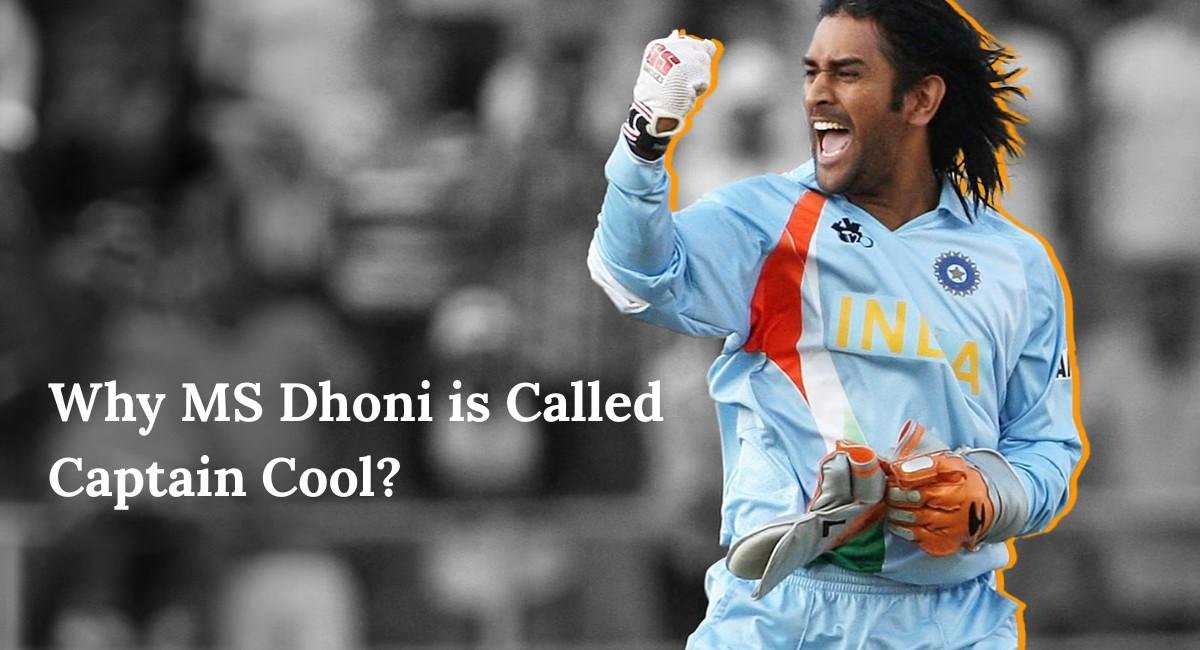
When people talk about calmness in cricket, one name comes naturally to mind MS Dhoni. For years, fans, commentators, and even rival players have called him Captain Cool. It is not just a catchy nickname. It is a reflection of how he carried himself on the field, especially in moments when the whole nation held its breath.
In a country like India, where cricket is almost a religion, pressure can feel unbearable. One mistake and the noise becomes deafening. One loss and the criticism is everywhere. Yet, in the middle of all that chaos, MS Dhoni stood like a calm sea. No dramatic celebrations. No angry outbursts. No panic. Just a steady face, sharp eyes, and quiet confidence.
But why exactly is he called Captain Cool? Let’s understand the story behind this famous nickname.
The Calm Face in the Storm
If you watched Dhoni captain India, you probably noticed something very unusual. Whether India needed 15 runs in the last over or was defending a small total in a World Cup final, his expression rarely changed.
Other captains might shout instructions, show frustration, or reveal tension. Dhoni, on the other hand, would simply adjust the field, talk softly to his bowlers, and stand behind the stumps like nothing extraordinary was happening.
This calmness was not fake. It was natural. It came from the way he understood the game. He believed panic spreads quickly in a team. If the captain loses control, the players feel it immediately. So he made sure that no matter what the situation was, he would stay composed.
That composure became his identity.
The 2007 T20 World Cup – The Beginning of Captain Cool
In 2007, a young and relatively inexperienced Indian team traveled to South Africa for the ICC T20 World Cup. The tournament was new. Expectations were uncertain. Senior players were absent. And Dhoni had just been given the captaincy.
In the final against Pakistan, the match came down to the last over. The entire country was watching. The tension was unbelievable.
Instead of giving the final over to an experienced bowler, Dhoni chose Joginder Sharma. a decision that surprised many. Even in that nerve-wrecking moment, he did not look nervous. He trusted his instinct. He trusted his player.
India won. History was made. And people started noticing something special about their new captain.
That final over became the first big example of why Dhoni was different.
The 2011 World Cup Final – Ice in His Veins
The most iconic moment of Dhoni’s career came in 2011 at the Wankhede Stadium in Mumbai. The ICC Cricket World Cup final. India vs Sri Lanka. A billion dreams on the line.
India lost early wickets while chasing a challenging total. The pressure was enormous. Instead of sending a set batsman ahead of him, Dhoni promoted himself up the order. It was a bold move.
He started slowly, assessed the pitch, rotated the strike, and built a partnership. There was no rush. No visible anxiety. Just patience and clarity.
And then came that unforgettable moment. the winning six over long-on.
As the ball sailed into the stands, the crowd exploded. But Dhoni? He simply lifted his bat with a small smile. No wild celebration. No dramatic reaction. Just quiet satisfaction.
That image calm under unimaginable pressure. is permanently connected with the phrase Captain Cool.
Decision Making Without Drama
One of the strongest reasons behind his nickname is the way he made decisions. Dhoni was known for unconventional strategies. Sometimes he would place a fielder in a position no one expected. Sometimes he would give the ball to a part-time bowler at a critical moment.
Yet, he never looked confused.
Even when his decisions failed, he rarely showed frustration. He accepted responsibility and moved on. That emotional stability gave his teammates confidence. They knew their captain would not blame them publicly.
Former players have often said that Dhoni’s biggest strength was his ability to make players feel secure. A calm captain creates a calm dressing room. And a calm dressing room performs better.
Silence Speaks Louder Than Words
Dhoni was never a captain who delivered long emotional speeches on the field. He preferred short conversations. Clear instructions. Quiet encouragement.
Behind the stumps, he constantly guided his bowlers. You could hear him on the stump mic giving simple advice like “Just bowl in the right area” or “Don’t worry, I’m here.”
That assurance matters a lot in cricket. A bowler who feels supported bowls with more freedom. Dhoni understood this psychological side of the game.
His silence was powerful. He did not need loud words to lead.
IPL and the Art of Finishing Calmly
When it comes to the Indian Premier League, Dhoni’s calmness became even more visible. As captain of Chennai Super Kings, he built a team culture based on trust and clarity.
CSK often found themselves in tight matches. The equation would read something like 20 runs needed off 10 balls. The crowd anxious. The commentators shouting. And there would be Dhoni, chewing gum, adjusting his gloves.
He mastered the art of finishing games without panic. He calculated risks. He waited for the right ball. He believed in taking the match deep rather than playing desperate shots.
Many times, he turned impossible situations into victories simply by staying calm and thinking clearly. That is not luck. That is temperament.
Handling Pressure Like a Normal Day
In India, captaining the national cricket team is one of the toughest jobs. Every performance is analyzed. Every decision is debated. Social media adds even more pressure.
Yet, Dhoni handled criticism with remarkable maturity. When India lost a series, he did not react emotionally. He answered questions politely. He took responsibility. He protected his teammates.
Even after stepping down from captaincy, he never created controversy. His retirement announcement was simple and quiet, posted on social media with a short message.
This emotional balance made people respect him even more. He showed that greatness does not need noise.
The Trust Factor
Ask players who played under Dhoni, and many will tell you one common thing. he backed his players.
He gave Rohit Sharma an opening role in white-ball cricket when things were uncertain. He trusted young players in big matches. He allowed bowlers to recover from bad overs without fear.
Trust builds confidence. Confidence builds performance.
A captain who screams after one mistake creates fear. A captain who stays calm creates belief. Dhoni chose belief.
Reading the Game Like Few Others
Another reason behind his cool nature was his deep understanding of the game. As a wicketkeeper, he had the best view of the field. He observed everything the batsman’s footwork, the pitch behavior, the bowler’s rhythm.
Because he read situations so well, he rarely felt surprised. And when you are not surprised, you do not panic.
He often slowed down the game when required. Changed the pace strategically. Used DRS wisely. Rotated bowlers smartly.
Calmness comes from clarity. Dhoni always seemed clear about what he wanted.
Emotional Control in Victory and Defeat
It is easy to stay calm when you are winning. It is difficult when you are losing.
Dhoni showed the same body language in both situations. Whether lifting trophies or walking back after a loss, his expression barely changed.
This emotional consistency made him unique. Fans saw in him a leader who did not let success get into his head and did not let failure break his spirit.
The Legacy of Captain Cool
Over the years, the nickname Captain Cool became more than just a phrase. It became a symbol of leadership.
Young cricketers look at Dhoni as an example of how to behave under pressure. Not just in sports, but in life. Stay calm. Think clearly. Trust your team. Accept responsibility.
His legacy is not only about trophies. though he won plenty, including ICC tournaments and IPL titles. It is about mindset.
In a game where emotions run high, he chose composure.
Why Fans Still Call Him Captain Cool
Even after retiring from international cricket, whenever Dhoni walks onto the field in the IPL, the stadium erupts. Yet, his personality remains unchanged. Same relaxed walk. Same quiet smile.
The nickname has survived because it was never artificial. It came from years of consistent behavior. From finals won under pressure. From dressing rooms kept united. From decisions taken bravely but calmly.
He showed that leadership is not about shouting the loudest. It is about thinking the clearest.
Final Thoughts
In the end, the reason MS Dhoni is called Captain Cool goes far beyond a few calm expressions on the field. It is about the way he handled pressure when the entire nation was watching. It is about making bold decisions without showing fear. It is about trusting his teammates even when things were not going well. Dhoni proved that leadership is not about shouting instructions or showing aggression.
Sometimes, the strongest leader is the one who stays silent, thinks clearly, and acts at the right moment. His calm mindset in World Cup finals, last-over thrillers, and high-pressure IPL matches created a lasting image in the hearts of fans. Captain Cool is not just a nickname given by commentators. it is a title he earned through years of composure, confidence, and quiet strength.
Frequently Asked Questions About Captain Cool Ms Dhoni
Why is MS Dhoni called Captain Cool?
Because he stays calm and composed in high-pressure situations and makes smart decisions without panic.
When did he get the nickname Captain Cool?
The nickname became popular after the 2007 T20 World Cup and the 2011 World Cup final.
What makes Dhoni a calm captain?
His emotional control, clear thinking, and strong trust in his teammates.
Is he still called Captain Cool today?
Yes, fans still call him Captain Cool, even after his international retirement.