

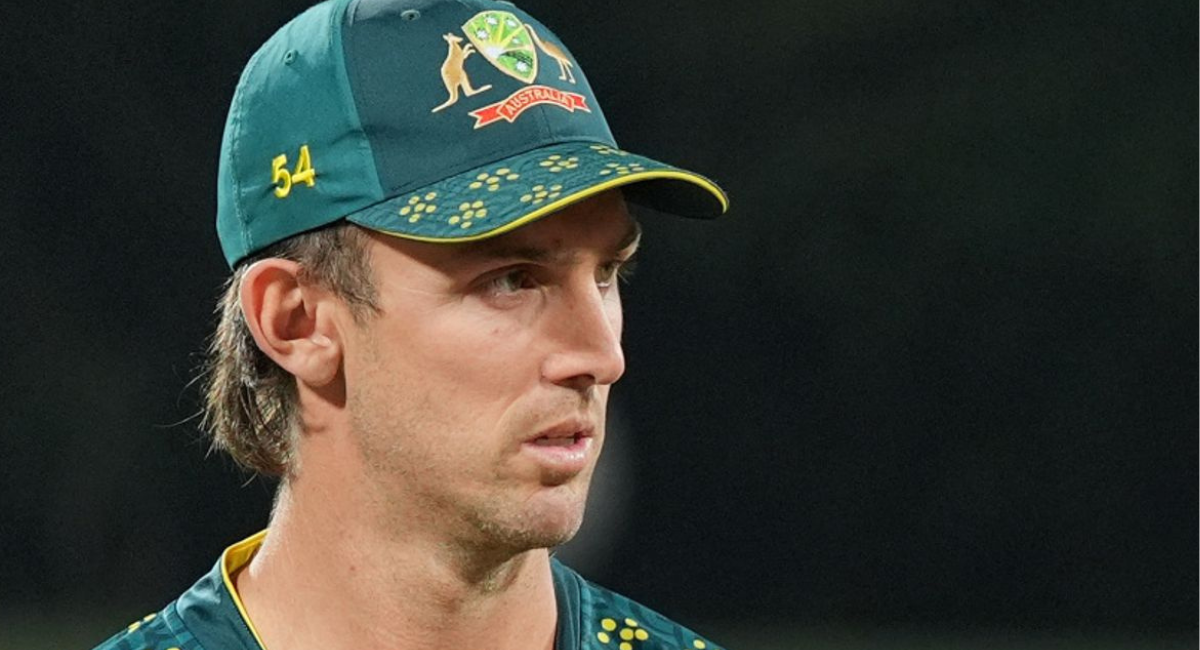
Shock. Silence. Disbelief. That was how it felt as Australia T20 World Cup 2026 exit took place so much earlier than anyone had ever predicted. A side notorious for stepping up in big moments, for winning ICC events, is out of the tournament at group stage. Let’s explore why this has happened.
Introduction
Australia have for decades garnered a reputation as serial contenders at global events. With their power and resistance to pressure busting, early exits have been rare in the France annals of history. It’s why Australia’s T20 World Cup 2026 exit has become such a hot topic among commentators, ex-players and the public.
Australia’s T20 World Cup 2026 exit is a disappointment after they failed to make the knockout stage. The tide turns Australia’s T20 World Cup 2026 exits when the key game between Zimbabwe and Ireland was drenched by rain.
Also read: Nepal beat Scotland
What Went Wrong in 2026?
The Australia’s T20 World Cup 2026 exit came not as a shock, nor an instant implosion, but rather was the endpoint of a series of poorly judged decisions and fluctuating form. Pitted in a tough pool, Australia couldn’t adjust swiftly enough to subcontinental-style conditions that required adaptable batting styles and intelligent bowling changes.
Fragile Middle Order
Australia’s top order got off to reasonable starts, but the middle order proved more than once inadequate under scoreboard pressure. Twice they lost clutches of wickets between overs 8 and 14, disrupting momentum. Failure to rotate strike to quality spin is what killed us.
Ineffective Death Bowling
Australia lost momentum to go from its tradition of disciplined pace attacks.
Tactical Rigidity
Team selection has been one of the biggest talking points in the wake of Australia’s T20 World Cup 2026 exit. The critics suggested that Australia stuck to a pace-heavy attack when surfaces were aiding the spinners. Unlike some more flexible sides, Australia has been painfully slow in changing combinations to suit specific match conditions.
Fielding Standards Dip
This makes fielders even more valuable, we only have to look at Australian teams to know that the benchmark in fielding has been set! But some crucial dropped catches and misfields proved expensive. In a series in which the margins are razor thin, the mistakes swung momentum dramatically.
Australia T20 Exit at Group-Stage: 2009 vs 2026 Leadership Comparison
ICC World T20 2009
(Second edition, held in England)
Ricky Ponting captained Australia in the 2009 event.
Already captain who had led Australia to a couple of ICC ODI trophies, Ponting also captained them in the shortest format. However, the campaign proved disappointing. Australia was defeated by the West Indies and Sri Lanka in the group stage and did not advance to the Super Eights. Added to the English conditions, Australia’s inconsistency in the middle order and ineffective death bowling led to what was a first group-stage exit for them at a T20 World Cup.
ICC Men’s T20 World Cup 2026
In the 2026 version, Australia was captained by Mitchell Marsh.
Marsh was the captain in a closely contested group stage, but Australia did not compile sufficient victories to make it to the knockout stages. The side had a strong batting line-up and experienced pace-bowling attack but was inconsistent, particularly in pressure situations. Tactical inflexibility in selection of the playing members and poor fielding contributed to their early exit as well.
Australia failed to progress past the pool stage of a T20 World Cup for just the second time in history – an anomaly given it is one of cricket’s most successful ICC nations.
Leadership and Pressure
Although there was no lack of experienced campaigners, leadership on the field came in for criticism. Tournament cricket requires proactive captaincy – especially in T20s where match-ups are the key to everything. Bowling changes are made too late and powerplay fields are on the conservative side, letting opponents get away.
The The Australia T20 World Cup 2026 exit is also symptomatic of a passage of time. Senior players were on their way out, while youngsters had just begun taking baby steps and the equilibrium between some street smartness and fearless cricket looked unsure.
A Wake-Up Call for the Giants
Australia’s history in ICC tournaments is, of course, illustrious. Their strength is underlined by multiple World Cup titles across formats. However, this premature exit is an eye opener that vintage or form alone cannot guarantee success in the present day T20 cricket.
The Australia T20 World Cup 2026 exit may prove to be a T20 turning point everywhere. As the bitter defeat of 1992 ushered in an era of ascendant dominance later in that decade, this could prompt structural and strategic recalibration. An increased focus on their spin options, a more fluid and adaptable middle order and even tactical flex can point the way ahead in Australia’s roadmap.
For the moment at least, however, it is on to a rare sight: Australia leaving an ICC tournament before the knockouts. It is a humiliating chapter in the history of a powerhouse team, and an evocative reminder to the unpredictable beauty of T20 cricket.